What Is DownTek™? The Complete Guide to Hydrophobic Down

A Jöttnar technical guide

What Is DownTek™? The Complete Guide to Hydrophobic Down

DownTek™ helps down work in wet conditions. How the PFC-free hydrophobic treatment works and what the data means.

Down is the most efficient natural insulation available. It is also, in its untreated form, highly vulnerable to moisture. When down clusters get wet from rain, snow or perspiration the fine filaments collapse and clump together, losing the ability to trap air and insulate.

A saturated traditional down jacket can lose most of its insulating value rapidly. This has historically been down's defining limitation. In the wet, cold, changeable conditions of mountain environments, it's a limitation that matters. DownTek™ is the technology that solves it. This guide explains exactly how it works, what the performance data means in practice, and why it's become the our standard for serious down insulation.

What is DownTek™?

DownTek™ is a hydrophobic (water repelling) treatment applied to individual down clusters, meaning each cluster, not just the outer fabric, is treated. The treatment causes moisture to bead and roll off the down filaments rather than being absorbed into them. The result is down that maintains its loft and insulating ability in damp conditions far longer than untreated down. All Jöttnar down jackets use DownTek™ treated down as standard. It is not an optional upgrade or a marketing addition. It is the only down we use, because in the conditions we design for, untreated down is not adequate.

DownTek™ is not applied to the shell fabric - it is applied to the down itself. Even if moisture penetrates the outer layer, the insulation maintains its loft much longer.

This distinction - treatment on the down, not the shell - is what makes DownTek™ genuinely different from a standard DWR-coated outer fabric. A shell's DWR finish sheds water from the outside surface. DownTek™ works from the inside, at the level of the insulation itself. Both elements play a role in a complete down jacket system, but they are addressing different problems. The shell fabric helps keeps water out. DownTek™ ensures that any moisture that does get in through rain, seam penetration, or internal perspiration helps delay compromising the insulation's performance.


How DownTek™ works: the science and the application process

Traditional down is highly hygroscopic meaning it readily absorbs water. The fine filaments that make up each cluster have a natural affinity for moisture, which causes them to bond together when wet, collapsing the three-dimensional structure that traps air. DownTek™ ZeroPFC™, the specific variant used in all Jöttnar down products, uses a lipid-based nanotechnology treatment derived from naturally occurring lipids (fats). This treatment is applied to each individual down cluster at a molecular level, coating the filaments with a layer that creates surface tension against moisture. When water contacts treated down, it cannot be absorbed into the filament structure. Instead, water molecules bead on the surface and roll off, the same principle as water beading on a waxed surface.

The application process matters as much as the chemistry. DownTek™ treatment is applied in controlled closed-loop treatment baths, a process designed to prevent chemical runoff and local water pollution. The treatment solution is contained within the system rather than discharged into local waterways. Each batch of down is treated, tested and certified before leaving the facility.

The DownTek™ treatment is applied in closed-loop baths specifically designed to prevent chemical runoff into local waterways, an environmental standard that goes beyond regulatory requirements for textile processing.

The nano-level application means the treatment integrates with the filament structure itself rather than sitting as a surface coating. This is why it does not affect the feel, softness or loft of the down. And it is why the treatment does not wash out: it is bonded to the filament at a molecular level, not adhered to the surface where it could be gradually abraded or washed away.

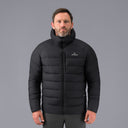
Jöttnar down - DownTek™ ZeroPFC™ as standard

1 | 16

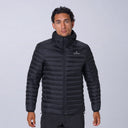
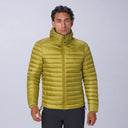
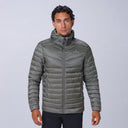
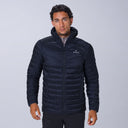
Fenrir Expedition-Grade Down Jacket


Colour
Size

Sizing charts

The measurements in the charts refer to your body measurements. Measure your body as described and then choose the corresponding product size.

Men's Sizing

Small
EUR 46 - 50
Medium
EUR 50 - 52
Large
EUR 52 - 54
X Large
EUR 54 - 56
Chest 96 - 102 cm
38 - 40 in.
102 - 106 cm
40 - 42 in.
106 - 111 cm
42 - 44 in.
111 - 116 cm
44 - 46 in.
Waist 76 - 81 cm
30 - 32 in.
81 - 86 cm
32 - 34 in.
86 - 91 cm
34 - 36 in.
91 - 96 cm
36 - 38 in.
Inside Leg 80 cm
31.5 in.
81 cm
31.9 in.
82 cm
32.2 in.
83 cm
32.7 in.


Women's Sizing

X Small
UK 6 - 8
EUR 34 - 36
US 2 - 4
Small
UK 10 - 12
EUR 36 - 38
US 6 - 8
Medium
UK 12 - 14
EUR 40 - 42
US 8 - 10
Large
UK 14 - 16
EUR 42 - 44
US 10 - 12
Bust 82 - 86.5 cm
32 - 34 in.
86.5 - 91.5 cm
34 - 36 in.
91.5 - 96.5 cm
36 - 38 in.
96.5 - 101.5 cm
38 - 40 in.
Waist 64 - 68.5 cm
25 - 27 in.
68.5 - 73 cm
27 - 29 in.
73 - 77.5 cm
29 - 31 in.
77.5 - 82.5 cm
31 - 33 in.
Low Hip 88 - 92.5 cm
34.5 - 36.5 in.
92.5 - 97.5 cm
36.5 - 38.5 in.
97.5 - 102.5 cm
38.5 - 40.5 in.
102.5 - 107.5 cm
40.5 - 42.5 in.
Inside Leg 77 cm
30.3 in.
78 cm
30.7 in.
79 cm
31.1 in.
80 cm
31.5 in.


How to measure


Measuring guide

Chest/Bust

With the tape under your armpit, measure across fullest part and across shoulder blades.

Waist

Measure around natural waistline at the narrowest part.

Low Hip

Measure around the widest part of the hip bones.

Inside leg

In a standing position, measure from top of inside leg at crotch to ankle bone.

View product

The chemistry: why PFC-free matters

The original method for creating hydrophobic down used perfluorocarbons (PFCs), specifically PFOA (perfluorooctanoic acid) and PFOS (perfluorooctanesulfonic acid), both C8 long-chain carbon compounds. PFCs are highly effective at repelling water, but they are persistent in the environment: they do not break down, have been found in human blood and wildlife globally, and are classified as substances of very high concern. PFOA is considered a toxicant and carcinogen. PFOS is a volatile sulfonamide that has been found to compromise the immune systems of both humans and animals.

Jöttnar uses DownTek™ ZeroPFC™ exclusively - a treatment that achieves the same hydrophobic performance using bluesign® approved chemistry that contains no PFCs or PFAS (per- and polyfluoroalkyl substances) of any kind. The lipid-based chemistry is derived from naturally occurring fatty acids, is non-hazardous, non-toxic, and safe throughout the product lifecycle. Bluesign® approval means the chemistry and the process have been independently verified against environmental and safety standards in textile manufacturing - a third-party verification rather than brand claim.

PFOA and PFOS persist in the environment indefinitely. DownTek™ ZeroPFC™ uses lipid-based chemistry with no fluorinated compounds of any kind, and delivers the same hydrophobic performance as PFC-based treatments.

The performance figures cited throughout this guide - the 1,500 minute test result, the 33% less moisture absorption, the 66% loft retention - all apply to the PFC-free ZeroPFC™ variant. This is not a compromise between performance and environmental responsibility. The PFC-free formula outperforms harmful formulas on the standardised shake test: 1,500 minutes vs 1,000 minutes (see below). Removing the harmful chemistry improved the performance.

The performance data

The difference between treated and untreated down is not marginal. DownTek™ performance is measured using the IDFL (International Down and Feather Testing Laboratory) shake test, a standardised industry measurement developed specifically to quantify DWR down performance. The test places a sample of down in a sealed jar with a standardised quantity of water on an oscillating machine. Saturation levels are measured at intervals until the down is completely submerged, meaning the clusters have fully collapsed and insulation has failed.

Untreated down fails in under an hour of direct moisture exposure. DownTek™ ZeroPFC™ treated down maintains performance for 1,500 minutes - 25 hours. That is not a marginal improvement.

A note on the shake test: the test involves down in direct and constant contact with water for the full duration this being a more extreme exposure than many real-world conditions. In actual use, DownTek™ treated down performs across a longer effective window than the test can directly measure. The test is useful as a comparative tool; the real-world application is usually less severe. What the test definitively establishes is the magnitude of the difference between treated and untreated down, which is the relevant data point for a buying decision.

Does the treatment wash out? And the practical difference in use

No, the DownTek™ treatment does not wash out. Many DWR treatments on shell fabrics degrade with washing and use, requiring periodic reapplication. DownTek™ treatment is bonded to the down filaments at a molecular level. Unlike topical treatments, it does not wash out over repeated launderings, which means the hydrophobic performance of the down is maintained throughout the jacket's lifespan.

In light rain or snow: treated down maintains full performance. Untreated down begins absorbing moisture and losing loft within minutes. Under a shell in heavy rain: both perform similarly as the shell is doing its job, and DownTek™ provides insurance for the moments when moisture penetrates. During high-output activity: perspiration is the primary moisture challenge for down in mountain use, and DownTek™-treated down is significantly less compromised by internal moisture than untreated down. After getting wet treated down dries three times faster, meaning recovery time between uses is substantially shorter.

DownTek™ does not make a down jacket waterproof. Nothing does. But it removes the binary wet/dry cliff edge that makes untreated down a liability in changeable mountain conditions.

One practical maintenance note: tumble drying on a low heat setting as part of regular care or as a standalone step reactivates the DownTek™ treatment and restores optimal hydrophobic performance if you notice any reduction over time. The treatment is permanent, but the thermal reactivation refreshes it to peak performance. This is worth doing at the start of each season before the jacket sees demanding use. See our down jacket care guide for full washing and storage instructions.

DownTek™ as part of the full down system

DownTek™ is one element of the approach Jöttnar takes to down jacket design. The complete system has three components working together. DownTek™ ZeroPFC™ treated down provides hydrophobic insulation through the mainbody of the jacket, maintainingloft and warmth in damp conditions. Synthetic insulation panels at the cuffs, collar and shoulders address the areas most exposed to moisture from external precipitation and perspiration as synthetic performs reliably when wet regardless of treatment. The shell fabric’s PFC-free DWR finish provides the first line of defence, helping to bead off light precipitation before it reaches the insulation. These three elements are not alternatives to each other; they are a system, each doing the job it is best suited for.

DownTek™ also complies with the Responsible Down Standard (RDS), the independent certification auditing the full supply chain to confirm down is not sourced from live-plucked or force-fed birds. The PFC-free chemistry certification is separate from the RDS certification. Both are in place across all Jöttnar down products. They address different things: RDS addresses how the down was sourced; DownTek™ ZeroPFC™ addresses how it was treated. Together they represent a complete accountability position on the down in every Jöttnar jacket.

RDS certification covers how the down was sourced. DownTek™ ZeroPFC™ certification covers how it was treated. Both are in place across all Jöttnar down products.

Frequently asked questions.

Does DownTek™ work in very heavy rain?

DownTek™ treats the down clusters themselves, not the shell fabric. DownTek™ provides insurance for moisture that penetrates the shell or enters through perspiration. In heavy rain, layer a waterproof shell on top of your down jacket.

Is DownTek™ down warmer than regular down?

At equivalent fill power and fill weight, DownTek™ treated down is warmer in practice in wet conditions because it retains loft where untreated down would lose it. In dry conditions, both perform equivalently.

Does DownTek™ affect the feel of the down?

No, the treatment is applied at a molecular level to the filament surface and does not affect the down's softness, loft or feel.

Which Jöttnar down jackets use DownTek™? All of them. DownTek™ ZeroPFC™ is standard across the entire Jöttnar down range.

The Jöttnar down range

Fenrir Expedition-Grade Down Jacket

£329.00
Regular price £329.00

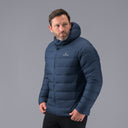
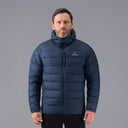
Thorne Down Jacket

£299.00
Regular price £299.00

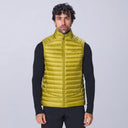
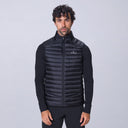
Asta Lightweight Down Gilet

£269.00
Regular price £269.00

Glossary

DownTek™
PFC-free hydrophobic treatment applied to individual down clusters.
DownTek™ ZeroPFC™
The PFC-free variant of DownTek™ used in all Jöttnar down jackets. Uses bluesign® approved lipid-based chemistry with no fluorinated compounds.
Hydrophobic
Water-repelling. A hydrophobic material causes water to bead and roll off rather than being absorbed.
DWR
Durable Water Repellency. A treatment applied to fabrics or insulation to resist moisture absorption.
PFC
Perfluorocarbon. A class of synthetic chemicals used in water-repellent treatments. Persistent in the environment and classified as substances of very high concern.
PFAS
Per- and polyfluoroalkyl substances. A broader category that includes PFCs. All PFAS are absent from DownTek™ ZeroPFC™.
Bluesign®
An independent certification verifying that chemistry and manufacturing processes meet environmental and safety standards in textile production.
IDFL shake test
The International Down and Feather Laboratory standardised test for measuring how long DWR-treated down resists moisture saturation.
RDS
Responsible Down Standard. Certification confirming ethical sourcing.
Loft
How much a down cluster expands when uncompressed. DownTek™ treatment preserves loft in wet conditions where untreated down would collapse.