Mountain Layering Guide: How to Layer for the Mountains

A Jöttnar technical guide

Mountain Layering Guide: How to Layer for the Mountains

How to layer for the mountains. Base layer, midlayer and shell explained. Systems for hiking, climbing and ski touring.

The three-layer system is one of those pieces of mountain knowledge that gets repeated often. Base layer, mid layer, outer shell layer. Most people know the words.

This guide goes deeper - what the layers are, how they interact, when to add and remove them, how to build and manage a system for specific mountain activities and when to use a four-layer system. If you already know the basics, there's still something useful here. If you're starting from scratch, start here.

Why layers work: the physics

A single thick jacket is less warm than multiple thinner layers of equivalent total thickness. This is counterintuitive but it's the physical reality, and it's worth understanding because it explains every other decision in this guide. Insulation doesn't generate heat, but instead traps it. What you're actually insulating is air. Still air is an excellent insulator; moving air is not. Multiple layers create multiple separate air pockets, each one a thermal barrier. A single thick layer creates one. More barriers, more warmth.

The second reason layers work is adaptability. Mountain conditions change rapidly; temperature, wind, precipitation, your own exertion level. A single jacket is either on or off. Multiple layers allow continuous fine-tuning. The ability to dump heat quickly on an ascent and restore warmth just as quickly at rest or at a belay is worth more than any single jacket's thermal rating. The third reason is moisture management. Perspiration is the primary cause of cold in mountain environments, not necessarily external temperature. Wet clothing conducts heat away from the body roughly 25 times faster than dry clothing. A layering system manages this by moving moisture away from the skin outward through the layers to the surface where it can evaporate. Each layer plays a role in this chain.

Insulation doesn't generate heat; it traps it. Understanding this changes every layering decision you'll make.

The system only works when each layer is doing its specific job. A base layer that traps sweat, a mid layer that blocks moisture transfer, or a shell worn over too many layers will undermine the whole chain regardless of the quality of individual garments. The rest of this guide explains what each layer's job actually is and how to manage the system in practice for different mountain activities. The principle is simple. The application takes only a little experience to get right, and that experience is accelerated considerably by understanding the principle clearly first.

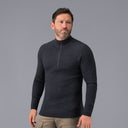
Layer one: the base layer

The base layer sits against your skin and has one job: move perspiration away from your body before it can saturate your other layers and start conducting heat away from you. A good base layer wicks moisture into its fabric and transfers it outward toward the mid layer. It should feel dry against your skin even when you're working hard. A base layer that fails at this by holding moisture against your skin makes everything else in the system worse. You will shiver.

The two material choices are merino wool and synthetic. Merino absorbs moisture into its fibres without feeling wet against the skin, regulates temperature naturally, and has inherent odour resistance that makes it practical for multi-day use without washing. It dries more slowly than synthetic, wears out faster under hard abrasion, and costs more. Synthetic wicks faster, dries faster, is more durable and less expensive, but has no inherent odour control and doesn't regulate temperature as naturally. For most active mountain use, extrafine merino - at 17–19 microns is the better base layer: its moisture buffering suits the variable, stop-start conditions that are the norm for hillwalking and mountaineering. For sustained high-output activity where rapid wicking matters more than, say, multi-day comfort, synthetic is the more rational choice.

The base layer's job is not just warmth, it's moisture management. A wet base layer can be worse than no base layer at all.

Fit and weight matter as much as material. A base layer should be close-fitting without being compressive. A too loose base layer creates air pockets that don't wick efficiently, defeating its purpose. As a guide: if you can pull significant fabric away from your body, it's too loose. On weight: lightweight base layers up to around 150gsm wick fastest and suit most active mountain use. Midweight around 180-200gsm suits lower-output and deep cold winter use. Heavyweight 300gsm+ is primarily for static cold-weather applications such as camp and belay use; not for days where you'll be moving with any sustained effort. When in doubt, go lighter and add a mid layer: it's a more flexible system.

Start with the right base

1 | 12

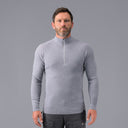
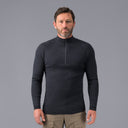
Heimdall Extrafine Merino Baselayer


Colour
Size

Sizing charts

The measurements in the charts refer to your body measurements. Measure your body as described and then choose the corresponding product size.

Men's Sizing

Small
EUR 46 - 50
Medium
EUR 50 - 52
Large
EUR 52 - 54
X Large
EUR 54 - 56
Chest 96 - 102 cm
38 - 40 in.
102 - 106 cm
40 - 42 in.
106 - 111 cm
42 - 44 in.
111 - 116 cm
44 - 46 in.
Waist 76 - 81 cm
30 - 32 in.
81 - 86 cm
32 - 34 in.
86 - 91 cm
34 - 36 in.
91 - 96 cm
36 - 38 in.
Inside Leg 80 cm
31.5 in.
81 cm
31.9 in.
82 cm
32.2 in.
83 cm
32.7 in.


Women's Sizing

X Small
UK 6 - 8
EUR 34 - 36
US 2 - 4
Small
UK 10 - 12
EUR 36 - 38
US 6 - 8
Medium
UK 12 - 14
EUR 40 - 42
US 8 - 10
Large
UK 14 - 16
EUR 42 - 44
US 10 - 12
Bust 82 - 86.5 cm
32 - 34 in.
86.5 - 91.5 cm
34 - 36 in.
91.5 - 96.5 cm
36 - 38 in.
96.5 - 101.5 cm
38 - 40 in.
Waist 64 - 68.5 cm
25 - 27 in.
68.5 - 73 cm
27 - 29 in.
73 - 77.5 cm
29 - 31 in.
77.5 - 82.5 cm
31 - 33 in.
Low Hip 88 - 92.5 cm
34.5 - 36.5 in.
92.5 - 97.5 cm
36.5 - 38.5 in.
97.5 - 102.5 cm
38.5 - 40.5 in.
102.5 - 107.5 cm
40.5 - 42.5 in.
Inside Leg 77 cm
30.3 in.
78 cm
30.7 in.
79 cm
31.1 in.
80 cm
31.5 in.


How to measure


Measuring guide

Chest/Bust

With the tape under your armpit, measure across fullest part and across shoulder blades.

Waist

Measure around natural waistline at the narrowest part.

Low Hip

Measure around the widest part of the hip bones.

Inside leg

In a standing position, measure from top of inside leg at crotch to ankle bone.

View product

Layers two and three: mid layer insulation

The mid layer's job is insulation - trapping warm air between the base layer and the shell. In a three-layer system it does this alone. In a four-layer system, sometimes needed in deep cold, a dedicated further insulation layer sits between the mid layer and the shell, worn specifically when temperatures drop or activity slows.

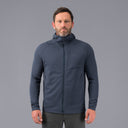
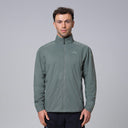
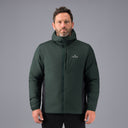
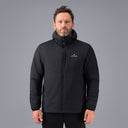
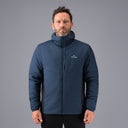
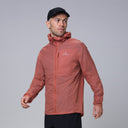
The mid layer choices break into three rough categories. Fleece, the traditional option, breathes well, insulates when damp, dries quickly, and suits the mixed movement and stops of general hillwalking. Wind cuts straight through open-knit fleece so a shell is always required in exposed conditions, but within a complete system it remains a versatile and cost-effective option. Octa® fleece, used in the Jöttnar Eldar, is a technical step up, with lower moisture retention, better warmth-to-weight ratio, and better breathability during sustained effort. Active insulation, specifically Polartec® Alpha™, used in the Jöttnar Asger range, takes a different approach, using an air-permeable structure that breathes aggressively during high-output movement while still insulating at rest. It's designed specifically for the exertion-rest cycle of variable activity mountain days, and for those activities it outperforms fleece in a way that justifies its premium.
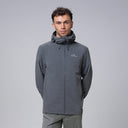
The mid layer is the most actively managed piece of the system. The mistake is treating it as something to put on and leave on.

A further dedicated insulation layer - layer three in a four-layer system, or layer two in a three-layer system, is a packable down or synthetic jacket deployed at stops and removed on the move. It provides the highest warmth-to-weight ratio of any layer and is the right choice for belays, summit stops, ski transitions and any stationary period in serious cold. The Jöttnar goose down Fenrir, and synthetically insulated Floyen and Ravn are all commonly used this way. The key point about this insulation layer: it must go on the moment you stop moving, not five minutes later when you're already cold. Cold sets in faster than most people expect when static, especially if you have been sweating. Develop the habit of insulating pre-emptively. A common hack if time is short, fingers are cold and the weather is freezing but not wet is to throw this layer straight on top of your outer shell as soon as you become static.

Layer four: the outer shell

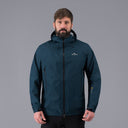
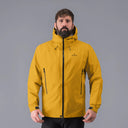
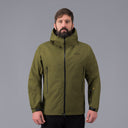
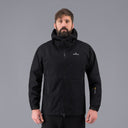
The shell's job is to keep everything underneath dry and the wind off. It should be thought of as a barrier, not an insulator. It doesn't provide warmth, rather it protects the warmth your base and mid layers have built. This matters because it changes how you think about shell specification: the metrics that count are waterproofing rating, breathability, seam sealing quality, and hood performance in wind, not insulation. The shell must do its protective job reliably in the conditions you'll take it into.

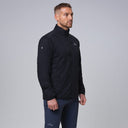
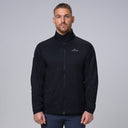
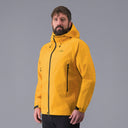
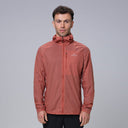
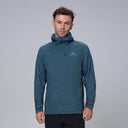
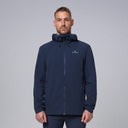
There are three outer layer types. A hardshell is fully waterproof and fully seam-sealed, the definitive choice for sustained rain, snow, and most changeable mountain conditions. For mountain use in the UK and the Alps, a 3-layer hardshell with a minimum 20,000mm waterproof rating is appropriate. A softshell is water-resistant but not waterproof. It has better breathability and more stretch than a hardshell, and is the right choice for high-output activities in changeable but predominantly dry conditions. Softshell is not a substitute for a hardshell when serious rain arrives. A windshell is windproof with minimal water resistance. It’s the lightest and most packable outer option, appropriate in dry conditions where wind protection and very light weight are the primary needs.

The shell doesn't provide warmth, rather it preserves the warmth your other layers have built by shielding them from rain and wind.

One important principle: the shell goes on before rain arrives, not after. By the time you feel rain on your face, your mid layers have already started absorbing moisture through the gap between collar and hood. If you can see rain coming across the valley, the shell goes on. A shell worn over too many layers will also trap moisture from perspiration regardless of how breathable the membrane is. The system only works when the total layering worn is calibrated to the activity level. If you're sweating hard in a shell in mild conditions, the problem is usually one layer too many underneath, not the shell's breathability.

Activity-specific systems

Hillwalking is the most common mountain activity and the easiest to layer for once the principle is understood. Moderate output with regular stops, exposure to changeable weather. The system: lightweight base layer, technical midweight fleece or Alpha™ mid layer, 3-layer hardshell. Management is simple but important: start cold as you will warm up within minutes of moving and starting warm means sweating from the outset. Remove the mid layer on sustained climbs if you're building up heat. Add back the moment you stop for any significant period. Shell goes on before rain arrives. That's it. The system looks after itself once the management habits are in place and can be used year-round. See below if you wish to add a fourth layer in very cold conditions.

Winter and alpine climbing is the most demanding layering challenge because of the extremity of the exertion-rest cycle. It’s high output on the approach and the technical sections, is exposed to sustained cold and is much less active at belays. The system: lightweight base, active insulation mid layer (Alpha™), down jacket or synthetic insulation jacket deployed specifically at belays and bivouacs, then 3-layer hardshell.

Ski touring represents a large swing between exertion and rest, can take place under hot alpine sun despite low ambient air temperatures, as well as snow, high winds and sleet. Skinning uphill can generate significant heat; transitions and descents demand warmth. The system: lightweight synthetic half-zip base for maximum ventilation control, lightweight active insulation or Octa® fleece mid, packable down or synthetic for cold transitions and descents, hardshell with pit zips. Comfort management on ski tours is almost entirely about arriving at transitions with dry layers - try to vent aggressively on the ascent, open pit zips early, loosen the collar. Cold dry layers insulate far better than warm damp ones. One hack – a light windshell worn over a base layer is very effective when the sky is clear and the weather is settled during late season spring ski-touring.

The layering principle is constant. How it's applied changes significantly depending on what you're doing. The system that works on a Scottish winter belay is not the same exact system needed during 3 season trekking.

Trail running poses a different challenge. Low bulk is essential, output is sustained and high, but exposure to weather and the consequences of stopping through injury, navigation checks or an, unexpected weather change make carrying no insulation a risk. The system is stripped back: ultralight base tee or full sleeve, windshell as an outer, and lightweight packable insulation carried small pack for emergencies. Trail running creates enough body heat that mid layers are rarely needed while moving. The risk is stopping unexpectedly and cooling rapidly with insufficient insulation available. An emergency layer is not optional regardless of forecast or perceived fitness level.

For all activities, the same principle applies at the extremities: a sophisticated torso system is undermined by inadequate gloves and headwear. Hands and head are primary routes for heat loss and the quickest to compromise the whole system if underprepared.

The general rules

Start cold, avoid overheating and keep inner clothing as dry as you can. Put on fewer layers than you think you need at the start of a day. You will warm up within minutes of moving. Starting warm means you're sweating almost immediately, wetting your base layer before you've gained any distance. A cold start feels uncomfortable for about three minutes. A sweaty base layer is uncomfortable for hours and harder to correct once it's happened. Never ignore perspiration. The moment you notice your base layer is wet from sweat, do something about it - either reduce layers to let heat escape or vent through the use of chest zips. Wet base layers use your body heat to dry while you're wearing them, and the extra evaporative action now needed will make you shiver and suffer when you stop.

Cotton kills. This has become a cliché, but it's still a dangerously common mistake. Cotton absorbs moisture readily and does not wick. A wet cotton t-shirt against your skin is an efficient cooling system – on a very short run on a very hot summer’s day you may even enjoy that cooling. But it will accelerate heat loss in cold conditions and it will not dry while you're wearing it. Leave cotton at home and replace it with anything, merino, synthetic, a blend, that actually wicks.

The shell goes on before rain arrives, not when you feel it.

Fit matters: each layer should allow full movement without restricting the layer beneath. Try your complete layering system on before you use it in the field and check that you can move freely through the full range of motion at every layer combination. A mid layer that restricts movement under a shell is both uncomfortable and could also be a safety consideration.

The rules that matter aren't complicated and they can be the difference between a comfortable mountain day and a miserable one.

So here’s the practical summary of a complete layering system, by layer: a base layer handles moisture management - use merino for variable conditions and multi-day use, synthetic for sustained high-output. A mid layer handles active insulation - use fleece or Alpha™ depending on output level, managed on and off throughout the day. A further insulation layer provides static warmth in very cold conditions -  down or synthetic, packed when moving and put on immediately at every stop. A shell handles weather protection - use hardshell for sustained rain, snow and mixed conditions, softshell for mostly dry, active days, choose windshell as the lightest option in dry windy conditions.

The right system is the one calibrated to what you actually do, in the conditions you actually face, managed actively throughout the day.

Build your system

Eldar Octa® Lightweight Fleece

£189.00
Regular price £189.00

Asger-HS Polartec® Alpha™ Jacket New Release

£269.00
Regular price £269.00

Floyen Hooded Midweight Insulated Jacket

£289.00
Regular price £289.00

Grim All-Mountain Hardshell Jacket

£549.00
Regular price £549.00

Einhar Windshell Jacket New Release

£195.00
Regular price £195.00

Sigvard Lightweight Softshell Jacket New Release

£229.00
Regular price £229.00

Glossary

Three-layer system
The standard mountain clothing approach using a moisture-wicking base layer, an insulating mid layer, and a weather-protecting outer shell.
Base layer
The innermost clothing layer, worn against the skin. Primary function is moisture management by wicking perspiration away from the body.
Mid layer
The insulating layer between base and shell. Traps warm air and is the primary tool for active thermal regulation during mountain activity.
Insulation layer
A packable down or synthetic jacket used as a layer in demanding conditions, deployed specifically during stationary periods such as belays and transitions.
Shell
The outermost layer. Provides weather protection through waterproofing and wind proofing while allowing moisture vapour to escape outward.
Thermal regulation
The management of body temperature during variable-output activity through active layer management, i.e. adding and removing layers as conditions and exertion level change.
Moisture wicking
The movement of perspiration away from the skin through a fabric, preventing it from accumulating next to the body where it would cause heat loss.
Belay layer
An insulating layer worn specifically during stationary periods such as belaying or waiting at transitions, when body temperature drops rapidly after exertion ceases.
Start cold
The principle of beginning a day with fewer layers than feel comfortable at rest, anticipating that exertion will raise body temperature within minutes.
Cotton kills
A mountaineering principle describing cotton's tendency to absorb and retain moisture, making it dangerous as a base layer in cold, wet conditions.
Polartec® Alpha™
A low-density, air-permeable insulation structure that allows heat and moisture to escape during effort while insulating effectively at rest.
Wetting out
When the DWR finish degrades and the outer face fabric absorbs water rather than shedding it, reducing breathability from the inside.