Midlayer Guide: Fleece, Active Insulation & How to Choose

A Jöttnar technical guide

Midlayer Guide: Fleece, Active Insulation & How to Choose

Fleece, Polartec® Alpha™, Octa®, synthetic insulation or down? A guide to help you choose your midlayer.

The midlayer is a vital piece of clothing in outdoor layering. Many people will treat it as a fixed variable; the same ‘fleece’ goes on every day, in every condition, regardless of what they're doing. This is leaving significant performance on the table.

The midlayer is one of the most dynamic pieces of the layering system. It's the layer you add and remove most often, the one that has the most influence on thermal regulation during activity, and the one where the choice of material makes the biggest practical difference to how you feel on the hill. This guide explains what a midlayer actually does, the main types available, when each is appropriate, and how to match your choice to your use.

What a midlayer is actually doing

In the three-layer system - base layer, midlayer, outer shell - the midlayer's primary job is insulation. It traps warm air between the base layer, which manages moisture, and the shell, which blocks weather, and holds it close to your body. But that simple description misses the subtlety. The demands on a midlayer worn during a sustained uphill climb can be very different to those on a midlayer worn at a static belay. The thermal requirements can change dramatically within the same mountain day, sometimes within minutes.

A good midlayer does three things. It insulates when you need warmth, whether at rest or static, at slow pace, or in general cold conditions. It breathes when you need to dump heat, for example during high-output movement. And it manages moisture, either by wicking it away during sustained effort (active insulation) or by continuing to insulate even when damp (fleece). Different midlayer types prioritise these three things differently. Understanding which matters most for your activity is the key to making the right choice.

The midlayer is a dynamic piece of the layering system. Getting comfortable with adding and removing it, pre-empting transitions rather than reacting to them, is as important as choosing the right one.

The biggest mistake people make with midlayers is treating them as something to put on and leave on. In a well-managed layering system the midlayer goes on and off multiple times during a mountain day, being added at transitions, removed on sustained climbs, swapped for a down layer or heavier belay jacket at a belay in extreme cold. Getting comfortable with this active management, and knowing when to pre-empt rather than react, is as important as the specific midlayer you choose.

Fleece: the versatile all-rounder

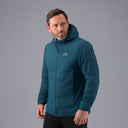
Fleece is the traditional mountain midlayer and has been for decades because it does its job reliably across a wide range of conditions. Fleece is a knitted synthetic fabric that insulates through trapped air in its fibres, retains insulating ability when damp, and dries quickly. Wind cuts straight through most open-knit fleece, so a shell layer is required in exposed conditions, but within a complete layering system it remains one of the most versatile and cost-effective midlayer options available.

Fleece weight, measured in gsm, is the primary variable determining warmth and breathability. Lightweight fleece (100–150gsm) suits high-output activity and mild conditions. Midweight fleece (200–300gsm) is the most common all-round option, covering general mountain use across the majority of conditions most people encounter. Heavyweight fleece (300gsm+) is for cold conditions with lower output such as camp layers, belaying, and cold-weather downhill skiing, where warmth is the priority and breathability demands are lower.

Fleece continues to insulate when damp, an advantage in the wet, changeable conditions that are the default for much mountain use. Wind resistance is its usual limitation and a shell layer is usually required.

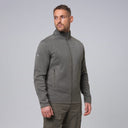
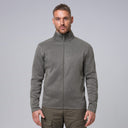
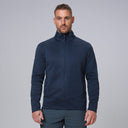
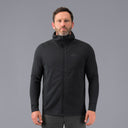
A note on Octa® fleece specifically: Octa® is a recent fleece technology developed by Toray using an octagonal cross-section fibre that produces exceptional warmth-to-weight ratio and dramatically lower moisture retention than standard fleece. It dries faster, weighs less for equivalent warmth, and breathes better during movement. The Jöttnar Eldar uses Octa® fabric and represents a step up in technical performance over standard fleece. For high-output mountain activity where you want fleece rather than active insulation, it is a very capable option.

Active insulation for variable mountain use

1 | 14

Asger Polartec® Alpha™ Hooded Jacket


Colour
Size

Sizing charts

The measurements in the charts refer to your body measurements. Measure your body as described and then choose the corresponding product size.

Men's Sizing

Small
EUR 46 - 50
Medium
EUR 50 - 52
Large
EUR 52 - 54
X Large
EUR 54 - 56
Chest 96 - 102 cm
38 - 40 in.
102 - 106 cm
40 - 42 in.
106 - 111 cm
42 - 44 in.
111 - 116 cm
44 - 46 in.
Waist 76 - 81 cm
30 - 32 in.
81 - 86 cm
32 - 34 in.
86 - 91 cm
34 - 36 in.
91 - 96 cm
36 - 38 in.
Inside Leg 80 cm
31.5 in.
81 cm
31.9 in.
82 cm
32.2 in.
83 cm
32.7 in.


Women's Sizing

X Small
UK 6 - 8
EUR 34 - 36
US 2 - 4
Small
UK 10 - 12
EUR 36 - 38
US 6 - 8
Medium
UK 12 - 14
EUR 40 - 42
US 8 - 10
Large
UK 14 - 16
EUR 42 - 44
US 10 - 12
Bust 82 - 86.5 cm
32 - 34 in.
86.5 - 91.5 cm
34 - 36 in.
91.5 - 96.5 cm
36 - 38 in.
96.5 - 101.5 cm
38 - 40 in.
Waist 64 - 68.5 cm
25 - 27 in.
68.5 - 73 cm
27 - 29 in.
73 - 77.5 cm
29 - 31 in.
77.5 - 82.5 cm
31 - 33 in.
Low Hip 88 - 92.5 cm
34.5 - 36.5 in.
92.5 - 97.5 cm
36.5 - 38.5 in.
97.5 - 102.5 cm
38.5 - 40.5 in.
102.5 - 107.5 cm
40.5 - 42.5 in.
Inside Leg 77 cm
30.3 in.
78 cm
30.7 in.
79 cm
31.1 in.
80 cm
31.5 in.


How to measure


Measuring guide

Chest/Bust

With the tape under your armpit, measure across fullest part and across shoulder blades.

Waist

Measure around natural waistline at the narrowest part.

Low Hip

Measure around the widest part of the hip bones.

Inside leg

In a standing position, measure from top of inside leg at crotch to ankle bone.

View product

Active insulation: Polartec® Alpha™

Active insulation represents a fundamental shift in how midlayer performance is achieved. Where traditional fleece and synthetic insulation are optimised for warmth, active insulation is optimised for the transition between movement and rest. Polartec® Alpha™ is the leading active insulation technology. It uses a low-density, air-permeable insulation structure that breathes during movement, allowing excess heat and moisture to escape while still providing warmth when you stop. The result is a layer that avoids the overheating problem of traditional midlayers during high-output activity without sacrificing warmth at the transitions where you need it.

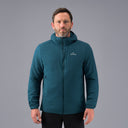
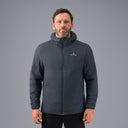
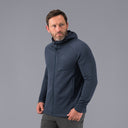
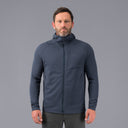
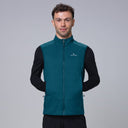
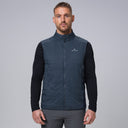
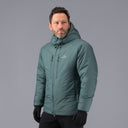
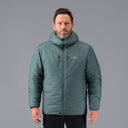
In practical terms: with a conventional fleece midlayer, serious uphill effort requires either removing the layer - fiddly, interrupts momentum, creates a wet base layer exposed to cold, or accepting that you may overheat and arrive at each transition saturated with sweat! With Alpha™, the layer manages the transition itself. It breathes aggressively enough during effort to prevent overheating, and insulates effectively enough at rest to keep you warm without needing to add a layer. The Jöttnar Asger Hooded Jacket and hoodless Asger-HS are built on Alpha™ construction for exactly this use case. The Asger Alpha™ Gilet focuses on providing core warmth with minimised bulk.

With a conventional fleece, high-output movement requires constant layer management. With Polartec® Alpha™, the layer manages the transition itself - breathing during effort and insulating at rest without requiring removal.

Alpha™ is most valuable in the specific context of variable-output mountain activity such as ski touring, climbing, general uphill/downhill trekking and any use where you cycle repeatedly between high exertion and stationary rest. It is less differentiated for consistently low output activity where a good fleece covers the ground at lower cost. Alpha™ is also versatile enough to function as a standalone outer layer in dry conditions due to the wind resistant outer we build into our Alpha™ based jackets. The premium over standard fleece is real.

Synthetic insulated midlayer and down as a midlayer

A synthetic insulated jacket used as a midlayer provides more warmth than fleece or Alpha™. The trade-offs are breathability and packability: synthetic insulation breathes less efficiently during high-output movement and does not self-regulate across the exertion-rest transition the way Alpha™ does. This makes it best suited to deployment at rest and then removal during movement. Use as the insulation layer in colder conditions where activity levels are lower, longer static periods are anticipated and warmth is the dominant requirement.

Down as a midlayer can be also used for transition warmth and its lightness gives it an advantage over synthetic insulation. A packable down jacket worn over a base layer or active insulation under a shell provides the highest warmth-to-weight ratio of any midlayer option. The down layer lives in a pack and deploys at any stop, then packs away immediately when movement resumes. Like synthetic insulation, down doesn't breathe adequately during high-output movement and must be removed on the move. 

Down as a midlayer is an option. The highest warmth-to-weight ratio, packs to nothing, deploys in seconds, but must be removed during high output activity

The Jöttnar down range products are commonly used as midlayers in this way, put on over a base layer at belays, transition points and stops, removed during movement. The gilet format of the Asta is particularly practical as a belay layer because it adds core warmth without the bulk of a full jacket under a shell. For full detail on down insulation, fill power and the down range, see our Complete Guide to Down Insulation.

The softshell and where it fits

A softshell jacket sits at an interesting point in the layering hierarchy. It’s more than, or at least different to other true midlayers, but less than a hardshell. Wind-resistant, highly breathable, with some water resistance, and some secondary light insulation properties, it can function as a versatile midlayer under a hardshell in cold or severe conditions, or as a standalone outer layer in dry, active conditions where a hardshell's full weather protection is not needed but wind resistance is. The Jöttnar Sigvard is a technical softshell with four-way stretch and a PFC-free DWR finish and is versatile enough to serve both roles. It is not a replacement for a hardshell in sustained rain, but as a dynamic all-conditions piece it occupies ground that neither open fleece nor a full hardshell fills as well. This was how we layered as Royal Marines during extreme cold weather / Arctic and mountain training. The military, breathable, softshell equivalent (called a ‘windproof) was worn over a base layer with a hardshell held in reserve and then placed on top of the windproof in rain, sleet and heavy snow.

Where softshell fits in practice: on dry, cold, windier days where a full hardshell is too warm and too heavy but open fleece would be cut through by the wind. As the outer layer on fast-moving routes in changeable but predominantly dry weather. As a high-breathability midlayer under a hardshell in conditions cold enough to need both wind protection and very light insulation. Understand softshell as a distinct category, with its own specific use cases rather than a generalised substitute for either fleece, down, synthetic insulation or hardshell.

Understand softshell as a distinct category, with its own specific use cases rather than a generalised substitute for either fleece, down, synthetic insulation or hardshell.

A note on layering order with a softshell: if wearing a softshell under a hardshell, the softshell's wind resistance slightly reduces the hardshell's breathability from the inside. In high-output conditions this can create a moisture management issue. Use the softshell as the outer layer on the move and add the hardshell only when weather demands it.

How to choose: matching midlayer to activity

Four questions help narrow the right midlayer quickly.

First: what is your output level? High-output, variable activity such as ski touring, climbing, or mountain running demands breathability. Active insulation (Alpha™, Octa® fleece) is designed for this. Lower-output or static use demands warmth. Conventional synthetic insulation (for example our Floyen range) and heavier weight fleece are designed for this.

Second: what goes over the midlayer? If you'll always have a windproof shell over the top, open fleece works well. If the midlayer will sometimes be the outermost layer in wind, you need wind resistance - Alpha™, softshell or synthetic insulation.

Third: does it need to pack? Fleece and down pack smallest.

Fourth: what is your budget? Fleece is the most cost-effective midlayer. Alpha™ commands a premium for genuine reasons and we believe the investment is justified.

There is no single best midlayer. There is a best midlayer for your specific activity, output level and layering context. Getting that match right makes more difference than the quality of any individual product.

One final point: most outdoor and mountain users end up with more than one midlayer. A fleece or softshell for general walking days, an Alpha™ layer for versatility, a packable down layer or heavier weight synthetic insulation jacket for belay and transition use. These are not redundant; they are complementary tools for different conditions and different activity types. Building the range over time, starting with the midlayer that matches your most common use case, is a more practical approach than searching for one layer that does everything equally well.

The Jöttnar fleece range

Njorunn Fleece New Release

£149.00
Regular price £149.00

Eldar Octa® Lightweight Fleece

£189.00
Regular price £189.00

Asger-HS Polartec® Alpha™ Jacket New Release

£269.00
Regular price £269.00

Asger Polartec® Alpha™ Gilet New Release

£195.00
Regular price £195.00

Ravn Severe Weather Insulated Jacket

£389.00
Regular price £389.00

Sigvard Lightweight Softshell Jacket New Release

£229.00
Regular price £229.00

Glossary

Midlayer
The insulating layer in a three-layer mountain system, worn between the base layer and the outer shell. Primary function is thermal regulation.
Active insulation
Insulation designed to breathe during high-output movement while still providing warmth at rest. Polartec® Alpha™ is the leading active insulation technology.
Polartec® Alpha™
A low-density, air-permeable insulation structure that allows heat and moisture to escape during effort while insulating effectively at rest.
Octa®
A fleece technology developed by Toray using an octagonal cross-section fibre, delivering superior warmth-to-weight ratio and low moisture retention compared to standard fleece.
Fleece
A knitted synthetic fabric used as insulation. Retains meaningful warmth when damp and dries quickly. Wind cuts through open-knit fleece; a shell layer is required in exposed conditions.
GSM
Grams per square metre. The weight measurement used for fleece and base layer fabrics. Higher gsm means a heavier, warmer fabric.
Thermal regulation
The management of body temperature during variable-output activity through active layer management, i.e. adding and removing layers as conditions and exertion level change.
Softshell
A wind-resistant, highly breathable outer layer with some water resistance. Functions either as a standalone outer layer in dry conditions or as a midlayer option under a hardshell.
Body-mapped insulation
A construction approach using different insulation quantities or materials in different zones of a jacket, matched to the thermal requirements of each body area.
Thermolite® EcoMade
A synthetic insulation made from recycled fibres.
Belay layer
An insulating layer worn specifically during stationary periods such as belaying or waiting at transitions, when body temperature drops rapidly after exertion ceases.