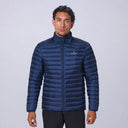
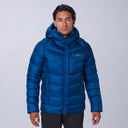
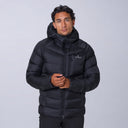
Fill Power Explained: 600 vs 700 vs 800 vs 850

A Jöttnar technical guide

Fill Power Explained: 600 vs 700 vs 800 vs 850

What is fill power and what do the numbers actually mean? The honest guide to 750, 800 and 850 fill power.

Fill power is the most quoted number in down jacket product specifications. Most guides tell you "higher is better" and leave it there. That's true to some extent but fill power only tells you part of the story, and buying on fill power alone can lead people to the wrong conclusions.

This guide explains what fill power actually is, what the numbers mean in practice, how it interacts with fill weight, and which rating is right for which use.

What fill power actually measures

Fill power is a standardised laboratory measurement. A sample of down weighing exactly one ounce (c.28g) - roughly the combined weight of three £1 coins - is placed in a cylinder and allowed to loft fully. The volume it occupies in cubic inches is recorded, and that number is the fill power rating. So 850 fill power means that 1 ounce of down expands to occupy 850 cubic inches when fully lofted. This volume is almost entirely made up of trapped air, with the down itself forming a vanishingly thin matrix within it. 600 fill power means the same weight of down occupies only 600 cubic inches. The higher the number, the larger the clusters, the more air trapped per gram, and the more efficiently the down insulates.

What this tells you: the lofting efficiency of the down, that is, how much air it traps per unit of weight. Higher fill power means larger, more resilient clusters, more air
trapped, and better insulation per gram of down.

What this does not tell you: how warm the jacket is. Fill power is a quality metric, not a warmth metric. A jacket's warmth depends on fill power combined with fill weight, the total amount of down in the jacket. These are different numbers and both matter.

Fill power is a quality metric, not a warmth metric. A jacket's warmth depends on fill power combined with fill weight.

The fill power test was developed to give buyers a consistent, comparable quality metric. It works well for what it measures - the lofting efficiency of the down at the point of manufacture. What it doesn't capture is how that down performs over time, how it responds to moisture, or how it's been distributed within the jacket. Those variables matter too. Fill power is the starting point, not the complete picture.


The fill power scale

The fill power scale in practice, from budget to expedition:

A few things worth noting about this scale. Most high street brands operate in the 550–700 range and very few reach 800+. The jump from 700 to 800 is significant: roughly 14% more volume per ounce, which translates directly to warmth-to-weight performance. The jump from 800 to 850 is meaningful but smaller; at this level, other variables such as fill weight, construction and baffle design begin to matter more than the fill power number itself. Beyond 900 FP, diminishing returns set in rapidly. The clusters are very large, require more careful handling during manufacture, and are significantly more expensive to source. Most expedition jackets treat 850–900 FP as the practical ceiling.

Most high street brands operate in the 550 - 700 fill power range. Very few reach 800+. The jump from 700 to 800 represents a 14% increase in insulation volume per ounce - a significant step up in warmth-to-weight performance.

The scale is useful as a starting framework, but fill power should never be read in isolation. A well-constructed jacket at 750 FP with the right fill weight will perform better in the mountains than a poorly specified jacket at 850 FP. The number tells you the quality of the raw material. Everything else - construction, fill weight, baffle design, shell fabric, synthetic insulation additions - determines what the jacket actually does with it.

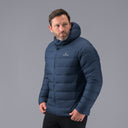
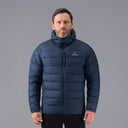
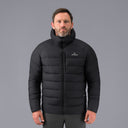
Jöttnar 850 fill power - built for the mountains

1 | 16

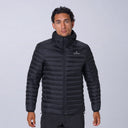
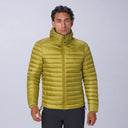
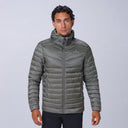
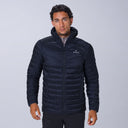
Fenrir Expedition-Grade Down Jacket


Colour
Size

Sizing charts

The measurements in the charts refer to your body measurements. Measure your body as described and then choose the corresponding product size.

Men's Sizing

Small
EUR 46 - 50
Medium
EUR 50 - 52
Large
EUR 52 - 54
X Large
EUR 54 - 56
Chest 96 - 102 cm
38 - 40 in.
102 - 106 cm
40 - 42 in.
106 - 111 cm
42 - 44 in.
111 - 116 cm
44 - 46 in.
Waist 76 - 81 cm
30 - 32 in.
81 - 86 cm
32 - 34 in.
86 - 91 cm
34 - 36 in.
91 - 96 cm
36 - 38 in.
Inside Leg 80 cm
31.5 in.
81 cm
31.9 in.
82 cm
32.2 in.
83 cm
32.7 in.


Women's Sizing

X Small
UK 6 - 8
EUR 34 - 36
US 2 - 4
Small
UK 10 - 12
EUR 36 - 38
US 6 - 8
Medium
UK 12 - 14
EUR 40 - 42
US 8 - 10
Large
UK 14 - 16
EUR 42 - 44
US 10 - 12
Bust 82 - 86.5 cm
32 - 34 in.
86.5 - 91.5 cm
34 - 36 in.
91.5 - 96.5 cm
36 - 38 in.
96.5 - 101.5 cm
38 - 40 in.
Waist 64 - 68.5 cm
25 - 27 in.
68.5 - 73 cm
27 - 29 in.
73 - 77.5 cm
29 - 31 in.
77.5 - 82.5 cm
31 - 33 in.
Low Hip 88 - 92.5 cm
34.5 - 36.5 in.
92.5 - 97.5 cm
36.5 - 38.5 in.
97.5 - 102.5 cm
38.5 - 40.5 in.
102.5 - 107.5 cm
40.5 - 42.5 in.
Inside Leg 77 cm
30.3 in.
78 cm
30.7 in.
79 cm
31.1 in.
80 cm
31.5 in.


How to measure


Measuring guide

Chest/Bust

With the tape under your armpit, measure across fullest part and across shoulder blades.

Waist

Measure around natural waistline at the narrowest part.

Low Hip

Measure around the widest part of the hip bones.

Inside leg

In a standing position, measure from top of inside leg at crotch to ankle bone.

View product

750 vs 800 vs 850: the comparison buyers actually need

750 fill power is excellent quality and the standard for serious outdoor use. A well-constructed 750 FP jacket with adequate fill weight will keep you warm in genuinely cold conditions. The Jöttnar Thorne uses 750 fill power; a deliberate choice for a jacket designed for sustained outdoor and daily mountain use, where durability and fill weight matter as much as fill efficiency.

800 fill power is premium quality. It’s noticeably lighter and more packable than 750 FP at equivalent warmth. The step up to 800+ is most valuable when pack weight is critical: alpine approaches, multi-day routes, travel. The difference is real and measurable, but won't be obvious to most people in everyday use.

850 fill power is the top of the practical range, used in jackets where warmth-to-weight is the dominant consideration, such as expedition use, altitude, or other weight-critical applications. One ounce of 850 FP down occupies 42% more volume than 600 FP down. This is the fill power used in the Jöttnar Fenrir and Asta; chosen specifically for mountain use where every gram of weight saved has a compound effect over a full day.

One ounce of 850 fill power down occupies 42% more volume than 600 fill power down. When every gram is carried uphill and warmth is a survival requirement, that difference is significant.

If you're choosing between a 750 and 850 fill power jacket from different brands, the fill power number is only one variable. A 750 FP jacket with significantly more fill weight may be warmer than an 850 FP jacket with less. And a well-constructed 750 FP jacket will outlast a poorly made 850 FP jacket by years. Fill power is a useful quality signal but it's not a complete specification.

Fill power and fill weight: why you need both numbers

Fill power measures quality - how efficiently the down insulates per ounce. Fill weight measures quantity - how many grams of down are actually in the jacket. Warmth is a function of both. Neither number alone tells you how warm a jacket will be.

A practical example: two jackets, both claiming 800 fill power. Jacket A has 800 FP and 120g fill weight - lightweight, packable, warm. Jacket B has 800 FP and 200g fill weight - heavier, but warmer in serious cold. Jacket B will be significantly warmer despite identical fill power.

Two jackets with identical fill power ratings can have radically different warmth. The difference is often fill weight.

Why don't companies (including us) publish fill weight prominently? Partly because fill power makes for a cleaner headline. But there's also a legitimate reason: fill weight comparisons across brands are less useful than they appear, because jackets are constructed differently - different baffle configurations, hybrid fills, different volumes in hoods and collars. A jacket must be tuned to achieve its intended performance, and loading up on fill weight alone doesn't guarantee the outcome. We're happy to discuss fill weight in context for any Jöttnar jacket - please just get in touch.

Down-to-feather ratio and choosing the right fill power for your use

Fill power and down-to-feather ratio are separate but related quality indicators. The down-to-feather ratio, for example 90/10 or 93/7, describes what percentage of the fill is down clusters versus feathers. Higher down content means better insulation, lighter weight, and less chance of feather poke-through. Higher quality down at higher fill power tends to come from older, larger birds that also produce a cleaner yield, so premium fill power and high down ratios often go together. Jöttnar uses 850 fill power in a 93/7 ratio in the Fenrir and Asta and the two numbers together describe down at the top end of what is practically achievable.

In typical certain conditions - wet, cold, changeable - the question of wet-weather performance is as important as fill power. An 850 FP jacket with DownTek™ hydrophobic treatment performs significantly better than an 850 FP jacket without it.

Fill power tells you about warmth in dry conditions. Hydrophobic treatment tells you about performance in the conditions you'll often actually encounter – wet, damp, raining. An 850 FP jacket with DownTek™treatment maintains most of its loft and insulating value when wet; an 850 FP jacket without it can lose up to 90% of its insulating value in sustained moisture. For anyone spending time in UK or North Atlantic mountain environments, DownTek™ treatment is not optional - it's as important as the fill power rating itself.

Frequently asked questions

Is 850 fill power good?

Yes. 850 fill power is at the top of the practical range, used in expedition and alpine jackets where warmth-to-weight is the dominant requirement. It's excellent down, but remember that fill weight also determines warmth. An 850 FP jacket with a small fill weight might not be as warm as a 750 FP jacket with a large fill weight.

What is the highest fill power available?

Down exceeding 900 fill power exists but is uncommon in production jackets. The clusters are very large and delicate to work with during manufacture and it is technically demanding and expensive to process them without damage. Beyond 900 FP, diminishing returns set in rapidly. Most expedition jackets treat 850–900 FP as the practical ceiling.

Does higher fill power last longer?

Higher fill power down comes from older, larger birds and tends to be more resilient over time. The key factor in longevity, however, is care: proper washing and storage in a non-compressed state preserves down's lofting ability regardless of fill power rating.

Is 750 fill power warm enough for winter?

Yes, for most winter use. A well-constructed 750 FP jacket with adequate fill weight will keep you warm in serious cold and can also be worn everyday off the hill.

What fill power does Jöttnar use?

The Fenrir and Asta use 850 fill power, 93/7 ratio, DownTek™ treated goose down. The Thorne uses 750 fill power, 90/10 ratio, DownTek™ treated goose down. Both are at the high end of their respective fill power categories.

When buying a down jacket, ask for two numbers: fill power (quality) and down-to-feather ratio (purity). Together they tell you almost everything.

The two numbers that matter when buying a down jacket: fill power - the quality of the down, ranging from 600 to 900+; and down-to-feather ratio - the proportion of down to feather, with 93/7 being among the highest achievable. You won't find fill weight declared on Jöttnar product pages, and as we explain in this guide, cross-brand fill weight comparisons are less useful than they appear. What you will find is the fill power and down-to-feather ratio for every jacket - the numbers that tell you
what the down itself is, before construction variables come into play. If you want to go deeper on specification for a specific jacket, get in touch.

The Jöttnar down range

Fenrir Expedition-Grade Down Jacket

£329.00
Regular price £329.00

Thorne Down Jacket

£299.00
Regular price £299.00

Asta Lightweight Down Gilet

£269.00
Regular price £269.00

Glossary

Fill Power
Volume (cubic inches) one ounce of down occupies when fully lofted. Quality metric.
Fill weight
Total mass of down in a jacket (grams). Combined with fill power determines warmth.
Loft
How much a down cluster expands when uncompressed. Greater loft = better insulation.
Down-to-feather ratio
The proportion of down clusters to feathers. Higher down content = better insulation, lighter weight.
Warmth-to-weight ratio
The amount of insulation a material provides relative to its weight. Down outperforms synthetic at high fill powers.
DownTek™
PFC-free hydrophobic treatment applied to individual down clusters.
Baffle
Channels within a jacket that contain the down and prevent migration.
Body-mapped
A construction approach where different insulation materials or quantities are placed in different zones of a jacket according to performance requirements.