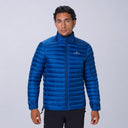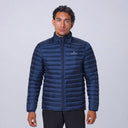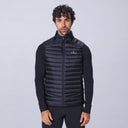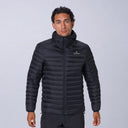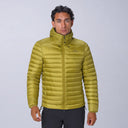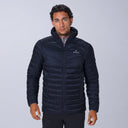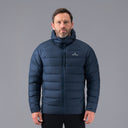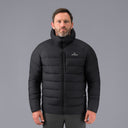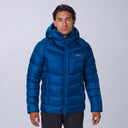
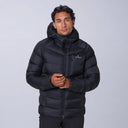
Men's Goose Down Jackets

Lightweight Goose Down Jackets

Hydrophobic goose down. Lightweight, expedition-grade warmth.

Fjorm Hydrophobic Down Jacket New

£499.00
Regular price £499.00
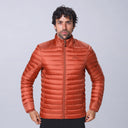
Thorsen Lightweight Down Jacket New

£299.00
Regular price £299.00
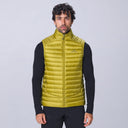
Asta Lightweight Down Gilet New

£259.00
Regular price £259.00

Fenrir Expedition-Grade Goose Down Jacket New

£329.00
Regular price £329.00
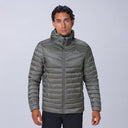
Varmr Lightweight Down Jacket New

£259.00
Regular price £259.00
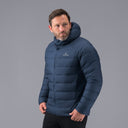
Thorne Down Jacket

£299.00
Regular price £299.00

Goose Down Jackets: How to Choose

Goose down is the warmest insulation for its weight. It packs down small, lofts back up when you need it, and with care it lasts for years. What separates one goose down jacket from another is the quality of the down, how it is protected from moisture, and the fabric around it. Every down jacket we make uses hydrophobic goose down, from 650 to 850 fill power.

Understanding Goose Down

Why goose down

Down clusters are the soft undercoat beneath a bird's feathers. Each cluster is a three-dimensional ball of fine filaments that traps air, and trapped air is what keeps you warm. No synthetic insulation yet matches down's warmth for its weight or how small it packs.

Fill power

Fill power measures the loft of the down: how much space one ounce fills, in cubic inches. Higher fill power means more warmth for the same weight. Our range runs from 650 fill power in the Varmr to 850 fill power in the Fenrir, Thorsen, Asta and Fjorm. Read Fill Power Explained: 600 vs 700 vs 800 vs 850.

Down vs feathers

A "goose feather jacket" is usually a goose down jacket with some feather mixed in. Feathers have a quill and add structure but little warmth; the down does the insulating. The down/feather ratio tells you the mix. Ours are 93/7 or 90/10, so at least 90% of the fill is down.

Hydrophobic down

Untreated down collapses when wet and loses most of its warmth. Our down is treated to repel water, so it stays dry far longer and keeps its loft in damp conditions. Read What Is DownTek™? The Complete Guide to Hydrophobic Down.


How to Choose a Goose Down Jacket

Warmth and weight.

For moving in the cold, a lightweight down jacket you can carry all day. For stops, belays, summits and camp, the warmest jacket you can carry.

Hood or no hood.

A down-filled hood adds a lot of warmth for little weight. A hoodless jacket layers more easily under a shell hood.

Jacket or gilet.

A down gilet keeps your core warm while leaving your arms free, and layers under a shell or over a base layer.

Outer fabric.

Lighter fabrics save weight; heavier ones resist abrasion from pack straps, rock and daily wear.

Coverage.

We make goose down jackets rather than long coats. For the most coverage and warmth, Fjorm has box-wall construction through the body and hood.

Wet weather.

Down works best in cold, dry conditions. In sustained rain, wear a hardshell over it, or choose synthetic insulation.

See the full range of men's goose down jackets.

Goose Down Jacket FAQs

Is goose down better than duck down?

Goose down clusters tend to be larger, so goose down generally reaches higher fill powers than duck down. All of our down is goose down. Read The Complete Guide to Down Insulation.

Down or synthetic insulation?

Down for the most warmth for the least weight in cold, mostly dry conditions. Synthetic for sustained wet. Read Down vs Synthetic Insulation: The Honest Guide.

How long does a goose down jacket last?

Looked after properly, a good down jacket keeps its loft for many years. Wash it with a down-specific cleaner when it gets dirty or starts to lose loft, and store it uncompressed.